
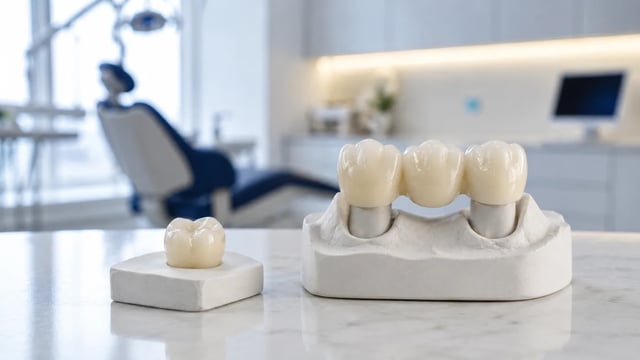
Dental crowns restore and protect damaged or weakened teeth, while dental bridges replace one or more missing teeth. Crowns are often recommended after large fillings or root canal treatment, and bridges may be discussed when teeth are missing and implants are not chosen. Treatment recommendations are always based on a comprehensive clinical evaluation.
What You Should Know About Restorative Care
- Targeted Restoration: Dental crowns specifically restore and protect damaged or weakened teeth.
- Effective Replacement: Dental bridges replace one or more missing teeth.
- Comprehensive Planning: Treatment recommendations are based entirely on clinical evaluation.
- Material Variety: Options include porcelain or ceramic crowns, zirconia crowns, traditional bridges, cantilever bridges, and Maryland bridges.
- Longevity: With proper care, typical crown lifespan is 10–20 years, while a typical bridge lifespan is 5–15 years.
When natural teeth become compromised by decay, wear, or trauma, restoring your smile is essential for both function and confidence. According to the Canadian Dental Association, restorative dentistry plays a crucial role in preventing further oral health complications and maintaining a balanced bite. At North Toronto Dental Centre, our crowns and bridges in North York are designed to seamlessly repair your smile. We provide clear, personalized guidance to help you choose the right restorative option for your long-term oral health.
What Are Crowns and Bridges?
Dental crowns restore and protect damaged or weakened teeth. Dental bridges replace one or more missing teeth. Both treatments are recommended based on a detailed clinical evaluation to ensure they meet your unique dental needs.
Before any treatment decisions are made, a clear explanation is provided so you understand the long-term value compared to alternative treatments.
When Is a Dental Crown Recommended?
A dental crown may be recommended to restore and protect a damaged or weakened tooth. Crowns are recommended to preserve natural teeth whenever possible.
After a Large Filling
Crowns are often recommended after large Tooth Fillings when the remaining tooth structure needs extra support.
After Root Canal Treatment
Teeth can become brittle following a Root Canal Treatment. Crowns are often recommended after root canal treatment to restore strength and protect the tooth.
For Damaged or Weakened Teeth
If a tooth is cracked, fractured, or severely worn, crowns restore and protect damaged or weakened teeth, providing a durable, long-lasting surface.
When Is a Dental Bridge Recommended?
A dental bridge may be discussed when teeth are missing and implants are not chosen. The recommendation depends on clinical evaluation and patient-specific factors. During your consultation, factors like bone health, cost, and longevity are discussed to determine if a bridge is the most appropriate tooth replacement option for you.
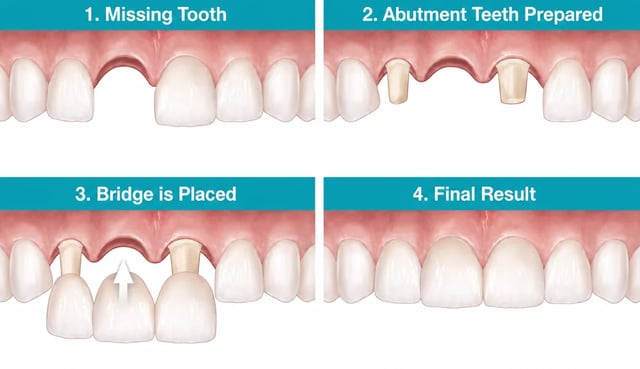
What Types of Crowns and Bridges Are Available?
North Toronto Dental Centre offers a variety of materials and designs. Material and design are chosen based on strength, aesthetics, and bite.
| Restorative Option | Clinical Description |
|---|---|
| Porcelain or ceramic crowns | Ceramic crown material option used to restore and protect damaged or weakened teeth. |
| Zirconia crowns | High-strength crown material option used to restore and protect damaged or weakened teeth. |
| Traditional bridges | Fixed bridge design option used to replace one or more missing teeth by anchoring to adjacent healthy teeth. |
| Cantilever bridges | Bridge design option used to replace one or more missing teeth when adjacent support teeth are present on only one side. |
| Maryland bridges | Minimal-prep bridge design option used to replace one or more missing teeth using a bonded framework. |
| Material/design selection | Chosen based on strength, aesthetics, and bite. |
How Does the Dentist Choose Between a Crown, Bridge, or Implant?
A crown, bridge, or implant is not chosen based on one factor alone. Crowns are recommended to preserve natural teeth when possible. Bridges are discussed when teeth are missing and implants are not chosen. Dental Implants are explained as an alternative when appropriate.
To guide this decision, factors like bone health, cost, and longevity are discussed, and a clear explanation is provided before treatment decisions are finalized.
Crown vs Bridge: What Is the Difference?
A crown restores and protects a damaged or weakened tooth, while a bridge replaces one or more missing teeth. The right option depends on whether the concern is a tooth that needs protection or a missing tooth that needs replacement.
| Topic | Dental Crown | Dental Bridge |
|---|---|---|
| Main purpose | Restores and protects damaged or weakened teeth. | Replaces one or more missing teeth. |
| Common recommendation | Often recommended after large fillings or root canal treatment. | Discussed when teeth are missing and implants are not chosen. |
| Treatment goal | Preserve natural teeth when possible. | Replace missing teeth. |
| Materials/designs | Porcelain, ceramic, or zirconia crowns. | Traditional, cantilever, or Maryland bridges. |
| Selection factors | Strength, aesthetics, and bite. | Strength, aesthetics, and bite. |
| Longevity | Typical lifespan: 10–20 years. | Typical lifespan: 5–15 years. |
Crown vs Bridge vs Veneer: What Should Patients Know?
A crown protects a damaged or weakened tooth, a bridge replaces missing teeth, and Dental Veneers are cosmetic restorations used for concerns such as staining, chips, cracks, wear, gaps, uneven shape, or smile enhancement goals.
| Treatment | Main Role |
|---|---|
| Crown | Restores and protects damaged or weakened teeth. |
| Bridge | Replaces one or more missing teeth. |
| Veneer | May improve the appearance of stained, chipped, cracked, worn, uneven, or spaced teeth. |
How Long Do Dental Crowns and Bridges Last?
The typical crown lifespan is 10–20 years. The typical bridge lifespan is 5–15 years.
Longevity depends heavily on the material used, bite forces, and your daily oral care. To maximize the lifespan of your restoration, regular dental visits help monitor restorations over time. Replacement is discussed when wear or damage occurs.
How Much Do Crowns and Bridges Cost?
Crowns and bridges cost depends on the material, tooth location, treatment complexity, and bridge design.
Crowns typically start from ,450 based on the clinic’s treatment planning information. Bridge pricing depends on the specific design and starts from $3,900. Insurance coverage is reviewed when applicable, and the long-term value compared to alternative treatments is fully explained to patients before treatment.
Are Crowns or Bridges Painful?
If you are concerned about comfort, the dentist can explain what to expect before treatment and answer questions during your consultation. A clear explanation is provided before treatment decisions, ensuring you are comfortable and informed every step of the way.
What Are the Downsides of Crowns and Bridges?
Crowns and bridges are not one-size-fits-all. The dentist reviews clinical findings to recommend the best option. Material and design are chosen based on strength, aesthetics, and bite. Factors like bone health, cost, and longevity are discussed, and alternative treatments such as dental implants are explained when appropriate. Regular dental visits help monitor the restorations, and replacement is discussed if wear or damage occurs down the line.
Why Do Dentists Recommend Crowns?
Dentists recommend crowns to restore and protect damaged or weakened teeth. They are often recommended after large fillings or root canal treatment. Ultimately, crowns are recommended to preserve natural teeth when possible, which is the preferred approach for long-term oral health.
Are Crowns and Bridges Right for You?
If you are considering crowns and bridges in North York, North Toronto Dental Centre can evaluate your teeth, explain whether a crown, bridge, implant, or another treatment may be appropriate, and review material, cost, longevity, and insurance considerations before treatment decisions.
FAQs About Crowns And Bridges
Dental crowns restore and protect damaged or weakened teeth. Dental bridges replace one or more missing teeth. Treatment recommendations are based on clinical evaluation.