
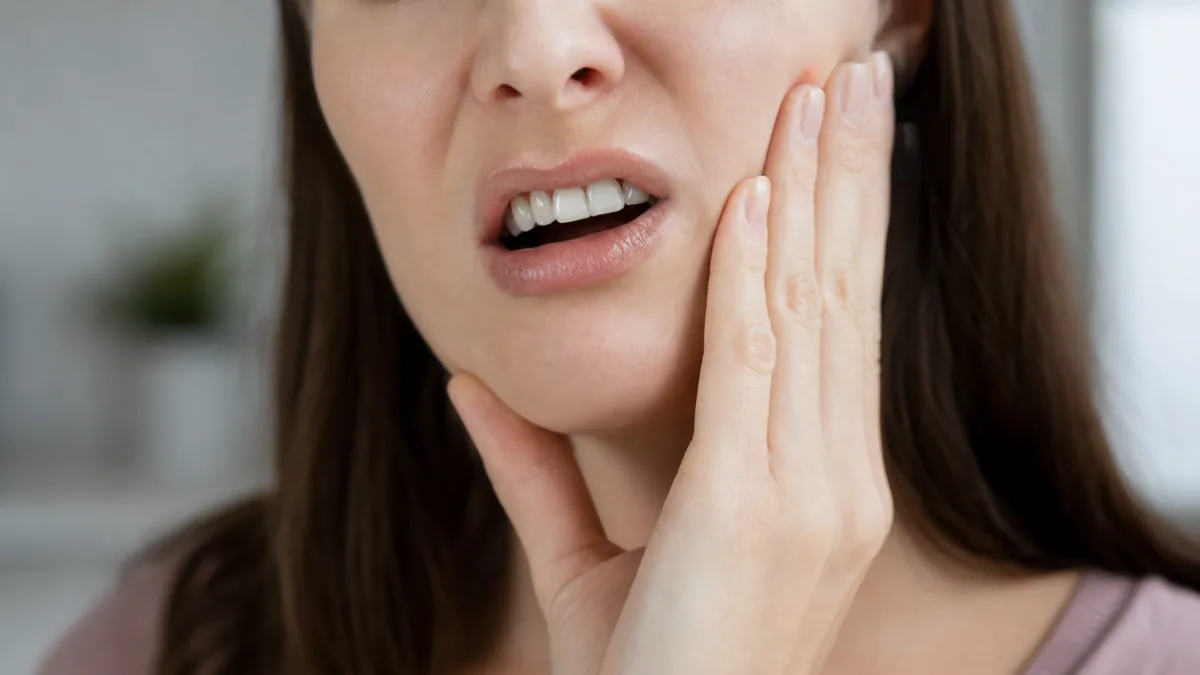
Therapeutic Botox is a dental treatment option used to help manage functional concerns such as TMJ disorder, jaw clenching, bruxism, and tension headaches. At a dental visit, suitability is assessed through TMJ evaluation, bite analysis, jaw muscle palpation, medical history review, and pain-pattern assessment before treatment is recommended.
What Patients Should Know About Therapeutic Botox
- Treated Conditions: Therapeutic Botox may be used for TMJ disorder (TMD), jaw clenching, bruxism, and tension headaches.
- Comprehensive Assessment: Suitability is assessed through a TMJ functional evaluation, bite analysis, jaw muscle palpation, medical history review, and pain-pattern assessment.
- Targeted Areas: Injections are typically directed at the masseter muscles, temporalis muscles, or frontal/forehead muscles.
- Treatment Timeline: Patients often experience relief within a few days, with the full effect taking 1 to 2 weeks.
- Ongoing Care: Follow-up appointments are generally scheduled every 4 months to maintain results.
- Professional Care: Treatment is administered by a dentist certified in therapeutic neuromodulator use.
Living with chronic jaw pain or muscle tension can severely impact your daily life. If you are seeking relief, therapeutic Botox in North York is an option designed to address the root muscular causes of your discomfort. At North Toronto Dental Centre, a dentist certified in therapeutic neuromodulator use will carefully evaluate your symptoms to determine if this treatment aligns with your needs.
What Is Therapeutic Botox?
Therapeutic Botox is used in dentistry to help manage functional concerns such as TMJ disorder, jaw clenching, bruxism, and tension headaches. Suitability is assessed before treatment through a dental and muscle-function evaluation.
Unlike cosmetic applications, Botox Therapeutic North York is focused entirely on relieving overactive muscles. When a patient comes in for a consultation, suitability is determined through a comprehensive diagnostic assessment before any therapeutic Botox treatment is recommended.
What Conditions Can Therapeutic Botox Help Manage?
At North Toronto Dental Centre, therapeutic Botox is used for TMJ disorder, jaw clenching, bruxism, and tension headaches.
TMJ Disorder / TMD
TMJ disorder can cause significant functional challenges. Therapeutic Botox for TMJ is designed to help relax the specific jaw muscles contributing to TMD symptoms.
Jaw Clenching and Bruxism
Jaw clenching and bruxism often happen involuntarily, especially at night. A bruxism treatment plan may include masseter Botox for clenching to reduce the force exerted by the jaw muscles.
Tension Headaches
Therapeutic Botox may also be used for tension headaches. During assessment, the dentist may determine that treating the frontal or forehead muscles is appropriate for managing these concerns.
How Does the Dentist Decide If Botox Is Appropriate?
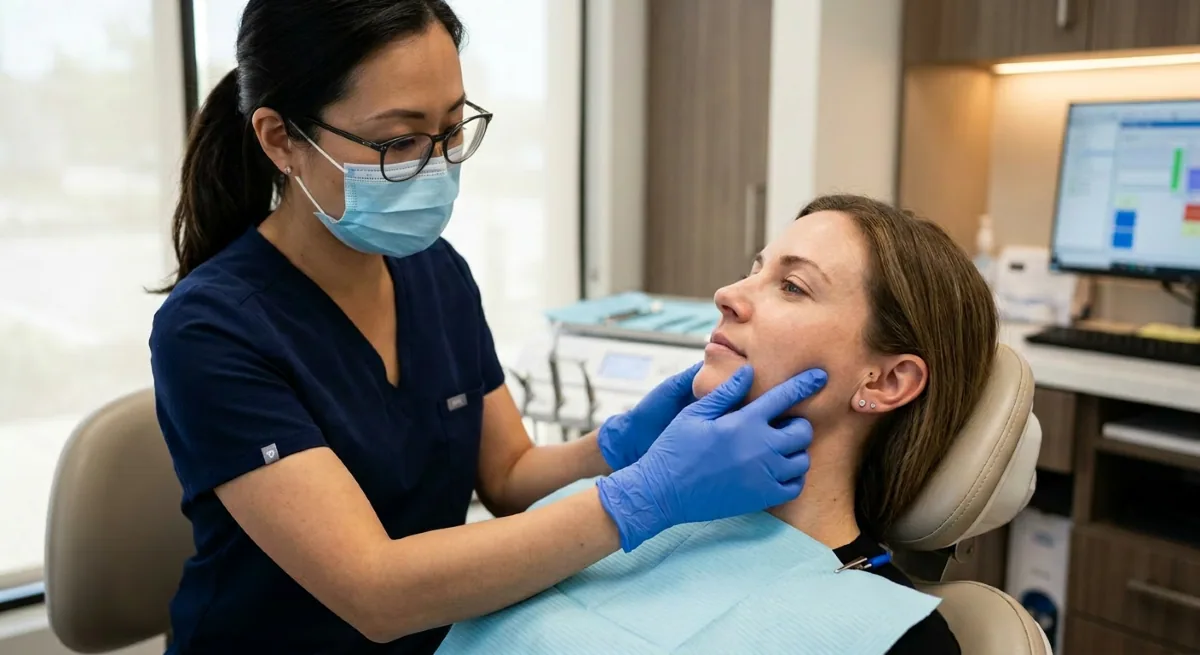
Before recommending therapeutic Botox, the dentist may complete a TMJ functional evaluation, bite analysis, palpation of jaw muscles, medical history review, and pain pattern or symptom assessment.
Suitability is assessed before treatment to ensure the best possible outcome. The diagnostic process typically includes:
- TMJ functional evaluation: The dentist assesses your overall jaw function.
- Bite analysis: The way your teeth come together is reviewed as part of the diagnostic process.
- Jaw muscle palpation: Jaw muscles are gently evaluated for tension and trigger points.
- Medical history review: Your medical background is reviewed before determining suitability.
- Pain pattern and symptom assessment: Your specific symptoms and pain patterns are considered before any treatment planning begins.
Where Is Therapeutic Botox Injected?
Typical therapeutic injection areas include the masseter muscles, temporalis muscles, and the frontal or forehead muscles (often targeted for tension headaches).
Depending on your specific diagnosis, injections are precisely targeted. A TMJ Botox treatment may involve the masseter or temporalis muscles to address jaw clenching treatment needs, while frontal muscles are targeted for tension headaches.
Therapeutic Botox for TMJ and Bruxism: What Should Patients Know?
Therapeutic Botox for TMJ and bruxism focuses on functional concerns such as jaw clenching, muscle tension, and related symptoms. The dentist assesses jaw function, bite, muscles, medical history, and pain patterns before deciding whether treatment is appropriate.
Patients searching for therapeutic Botox near North York should understand that this is a highly customized medical approach. By completing a thorough TMJ functional evaluation and bite analysis, the therapeutic neuromodulator dentist ensures that targeting the masseter muscles or temporalis muscles directly addresses the underlying functional issues.
How Long Does Therapeutic Botox Take to Work?
Patients typically experience initial relief within a few days, reaching full effect in 1 to 2 weeks. Follow-up appointments are generally scheduled every 4 months to maintain your results.
Patients often wonder when they will notice an improvement. Based on our clinical treatment timeline, you may experience initial relief within a few days. The full effect is typically reached in 1 to 2 weeks. Follow-up timing may be discussed based on the clinic's therapeutic treatment timeline and your individual response, generally scheduled every 4 months.
What Is the Difference Between Therapeutic Botox and Cosmetic Botox?
At our clinic, our focus is strictly on therapeutic Botox to help manage functional concerns such as TMJ disorder, jaw clenching, bruxism, and tension headaches, rather than cosmetic enhancements.
While both use the same underlying product, their goals in our clinic are different:
- Main Focus: Therapeutic Botox targets TMJ disorder, jaw clenching, bruxism, and tension headaches.
- Assessment: We require a TMJ functional evaluation, bite analysis, jaw muscle palpation, medical history, and symptom review.
- Injection Areas: Injections target the masseter, temporalis, and frontal / forehead muscles for tension headaches.
Who Provides Therapeutic Botox Treatment?
Therapeutic Botox is administered by a dentist certified in therapeutic neuromodulator use.
At North Toronto Dental Centre, your dentist has the specialized training required to assess jaw mechanics and safely administer Botox for TMD and bruxism.
Is Therapeutic Botox Right for Everyone?
Not necessarily. Suitability should be assessed through TMJ functional evaluation, bite analysis, jaw muscle palpation, medical history review, and pain-pattern or symptom assessment.
Patients with medical conditions or medication concerns should discuss them during the medical history review. A thorough medical history review is a mandatory part of our diagnostic process to ensure whether Botox for jaw clenching is safe and appropriate for you.
What Should Patients Do After Therapeutic Botox?
Personalized aftercare instructions will be provided directly by your dentist at the end of your appointment.
Aftercare instructions should come directly from the treating dentist at the time of your visit. Always follow the specific guidance provided by our clinic to ensure the best possible results.
Therapeutic Botox vs Night Guard Support for Clenching
| Topic | Therapeutic Botox | Occlusal / Night Guard |
|---|---|---|
| Main use | TMJ disorder, jaw clenching / bruxism, tension headaches | Teeth grinding, clenching, jaw tension, tooth protection |
| Assessment | TMJ evaluation, bite analysis, jaw muscle palpation, medical history, symptom review | Recommended based on clinical examination, symptoms, tooth wear, jaw pain, TMJ-related symptoms |
| Treatment focus | Muscle-related therapeutic support | Custom appliance protection and support |
| Follow-up | Follow-up every 4 months listed in the therapeutic Botox timeline | Guards checked regularly during Dental Exams |
| Best next step | Dentist determines suitability through assessment | Dentist determines suitability based on exam findings and symptoms |
FAQs About Therapeutic Botox
Therapeutic Botox is used in this dental context for TMJ disorder, jaw clenching or bruxism, and tension headaches. Suitability is assessed before treatment through a dentist-led diagnostic process.