

Dentures are removable appliances used to replace missing teeth. They may be recommended for patients missing multiple or all teeth and can help restore chewing, speech, and facial support. Denture options may include full, partial, flexible partial, implant-supported, or snap-on dentures, with suitability assessed case by case.
What You Should Know About Dentures
- Dentures are removable appliances used to replace missing teeth.
- They help restore chewing, speech, and facial support.
- Options include full, partial, flexible partial, implant-supported, and snap-on dentures.
- Typical dentures cost ranges from $600 to $2,100.
- The expected denture lifespan is 5 to 10 years.
Losing multiple teeth can significantly impact your daily life, but modern restorative dentistry in North York provides reliable solutions to help you regain your confidence. Whether you are exploring dentures for seniors or seeking an effective removable tooth replacement, North Toronto Dental Centre offers customized care designed to meet your specific needs.
What Are Dentures?
Dentures are removable appliances used to replace missing teeth. They may be recommended for patients missing multiple or all teeth and can help restore chewing, speech, and facial support.
Understanding dentures meaning and function is the first step toward restoring your smile. Treatment suitability is assessed case by case to ensure that the chosen dentures teeth align with your oral health requirements.
Who May Need Dentures?
Dentures may be recommended for patients missing multiple or all teeth. Suitability is assessed case by case based on comfort, stability, needs, patient goals, oral health, and jaw structure.
Dentures are not one-size-fits-all. The right option depends on how many teeth are missing, whether teeth were recently extracted, comfort expectations, stability needs, lifestyle, oral health, and whether other options such as implants or bridges are being considered. The decision is carefully guided by patient goals and how many natural teeth remain. Cost, comfort, bone health, and lifestyle are all considered before making a recommendation.
What Types of Dentures Are Available?
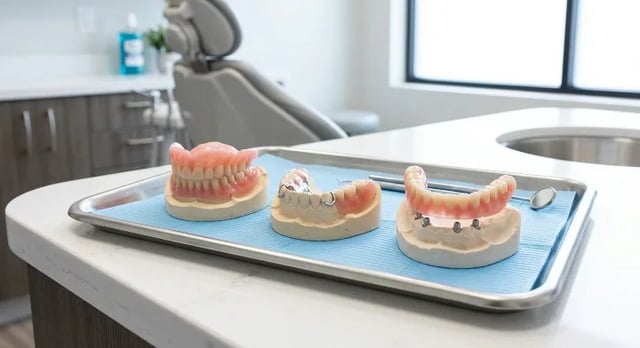
North Toronto Dental Centre offers full dentures, partial dentures, flexible partial dentures, and implant-supported dentures or snap-on dentures. The type recommended depends on comfort, stability, and patient needs.
What Is the Difference Between Full and Partial Dentures?
Full dentures may be used for patients missing all teeth in the upper and/or lower arch, while partial dentures may be used when some teeth are missing. Flexible partial dentures may also be considered.
Understanding the difference between partial and full denture options is critical for proper tooth replacement planning.
| Topic | Full Dentures | Partial Dentures |
|---|---|---|
| Main use | For upper and/or lower replacement when many or all teeth are missing. | For patients missing some teeth. |
| Design option | Full upper and/or lower dentures. | Partial or flexible partial dentures. |
| Recommendation basis | Comfort, stability, and needs. | Comfort, stability, and needs. |
| Clinical planning | Suitability assessed case by case. | Suitability assessed case by case. |
| Cost | Varies by type. | Varies by type. |
What Are Implant-Supported or Snap-On Dentures?
Implant-supported dentures or snap-on dentures are denture options that may be discussed when appropriate. The denture type is recommended based on comfort, stability, needs, bone health, lifestyle, patient goals, oral health, and jaw structure.
While these options offer enhanced retention, it is important to note that implants are explained as a fixed alternative when appropriate. For patients interested in partial dentures on implants or snap-on variations, cost, comfort, bone health, and lifestyle are thoroughly considered. The final decision is guided by patient goals and your specific dental needs.
Dentures vs Implants: Which Option Should You Consider?
Dentures are discussed as a removable tooth replacement option, while implants are explained as a fixed alternative when appropriate. Cost, comfort, bone health, lifestyle, long-term expectations, patient goals, oral health, and jaw structure are considered.
| Topic | Dentures | Dental Implants |
|---|---|---|
| Main role | Removable tooth replacement option. | Fixed alternative when appropriate. |
| Use | May replace multiple or all missing teeth. | May replace one or more missing teeth when suitable. |
| Planning factors | Comfort, stability, needs, cost, lifestyle. | Bone health, cost, longevity, suitability. |
| Patient discussion | Long-term expectations explained clearly. | Explained as an alternative when appropriate. |
| Decision basis | Patient goals and oral health. | Patient goals and oral health. |
Dentures vs Bridges: What Is the Difference?
Dentures are a removable tooth replacement appliance. Crowns and Bridges may replace one or more missing teeth when implants are not chosen. The right option depends on comfort, cost, lifestyle, and patient goals. Cost, comfort, bone health, lifestyle, oral health, and jaw structure actively guide the treatment choice.
Do You Have to Go Without Teeth While Waiting for Dentures?
Dentures may be placed after tooth extraction once healing allows. Timing should be discussed during your consultation.
If a Tooth Extraction is needed, the timing of dentures depends entirely on healing and case-specific planning. The dental team can explain what to expect before treatment decisions are made so that you are fully prepared for the process.
What Should You Expect When Wearing Dentures?
Patients should expect an adjustment period. Guidance is provided for eating and speaking, denture adhesives may be discussed when appropriate, daily cleaning instructions are provided, and follow-up visits may be scheduled for adjustments.
- Adjustment period: The adjustment period is explained clearly.
- Daily function: Guidance is provided for eating and speaking.
- Retention: The use of denture adhesives is discussed when appropriate.
- Denture care: Daily cleaning and care instructions are provided.
- Denture adjustment: Follow-up visits for adjustments are scheduled as needed.
How Are Dentures Made?
Dentures may be traditional lab-fabricated appliances made with advanced materials for improved comfort and fit. Technology is selected based on case complexity, and modern techniques are explained to patients.
Our clinic utilizes traditional lab-fabricated dentures to ensure quality. Advanced materials are used for improved comfort and fit, and the specific technology is selected based on case complexity. Throughout the process, modern techniques are explained to patients to maintain transparency.
How Much Do Dentures Cost?
The typical dentures cost range is from $600 to $2,100. Cost varies by type, including full, partial, and implant-supported dentures. Insurance coverage is reviewed when applicable.
If you are wondering about the dentures price, it is important to know that the exact fee depends on your specific needs. The typical denture cost range from $600–$2,100 covers various options. Cost varies by type: full, partial, or implant-supported. Insurance coverage is reviewed when applicable, and long-term maintenance and replacement are discussed to ensure you understand the full investment.
How Long Do Dentures Last?
The expected denture lifespan is 5 to 10 years. Long-term maintenance and replacement are discussed with patients.
To support this expected lifespan of 5–10 years, long-term maintenance and replacement are discussed during your visits. Follow-up visits for adjustments as needed help maintain a proper fit, while daily cleaning and care instructions are provided to preserve the material.
Are Dentures Right for You?
Dentures may be right for patients missing multiple or all teeth. The best option depends on comfort, stability, needs, cost, bone health, lifestyle, patient goals, oral health, and jaw structure.
If you are considering dentures near you, North Toronto Dental Centre can assess your needs. We explain full, partial, flexible partial, implant-supported, or snap-on options. We also review cost and insurance when applicable, and discuss long-term maintenance and replacement.
FAQs About Dentures
Dentures are removable appliances used to replace missing teeth. They may be recommended for patients missing multiple or all teeth and can help restore chewing, speech, and facial support.


