
Invisalign vs Braces: Which Is Better for Crooked Teeth?
Wondering whether Invisalign or braces is right for crooked teeth? Learn how suitability depends on case complexity, goals, and assessment.

Wondering whether Invisalign or braces is right for crooked teeth? Learn how suitability depends on case complexity, goals, and assessment.
Invisalign and braces are both orthodontic treatment options, but the right choice depends on the patient's concerns, case complexity, treatment goals, and clinical assessment. At North Toronto Dental Centre, Invisalign may be considered for adults seeking discreet orthodontic treatment or teens looking for an alternative to traditional braces.
What You Need to Know About Invisalign vs Braces
- Customized Alignment: Invisalign treatment uses removable trays, while braces use fixed brackets and wires.
- Targeted Corrections: Both options can address crowded teeth, overlapping teeth, gaps between teeth, and bite alignment issues.
- Discreet Care: Invisible braces for adults offer an aesthetic alternative to traditional metal appliances.
- Assessment is Vital: Your true suitability relies entirely on a comprehensive consultation and digital assessment.
Patients exploring ways to straighten your teeth without braces frequently ask our clinic which method is truly superior. The reality is that neither option is universally "better" for every single person. Instead, understanding the nuances of clear aligners vs braces allows you and your dentist to align the chosen therapy with your functional needs and lifestyle goals.
Invisalign vs Braces: What Is the Main Difference?
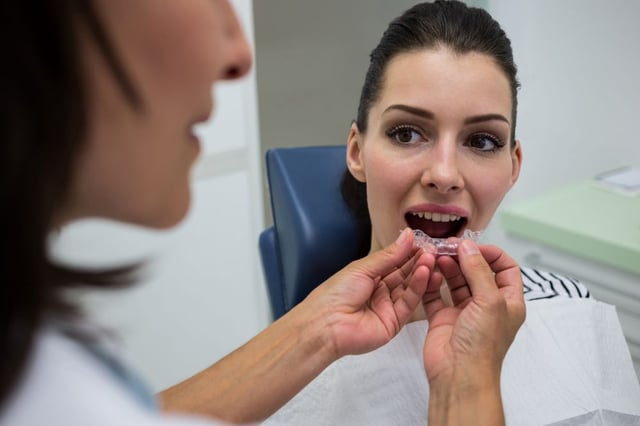
The primary difference lies in how the teeth are moved. Invisalign uses custom Invisalign aligners provided in stages to gently push teeth, while traditional braces pull teeth using fixed brackets and wires.
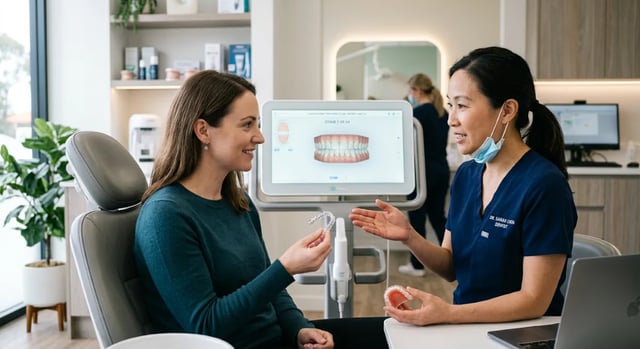
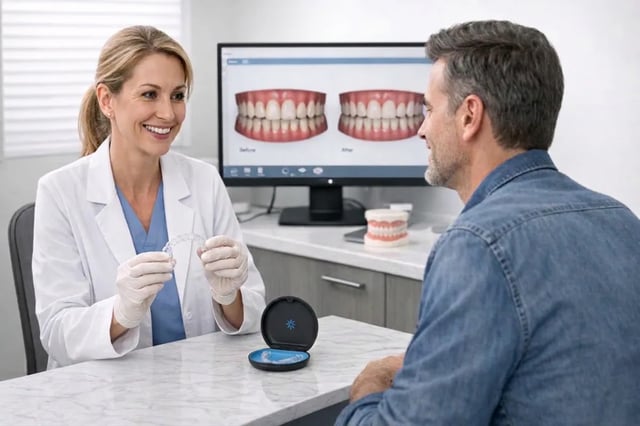
The right choice depends on the patient's concerns, case complexity, treatment goals, and clinical assessment. Invisalign treatment always begins with a consultation and digital assessment, and progress is carefully monitored with regular in-person visits. This modern approach is frequently considered by adults seeking discreet orthodontic treatment, while teens may consider Invisalign as an alternative to traditional braces.
Can Invisalign Help with Crooked or Crowded Teeth?
Yes, Invisalign may be used for crowded teeth or overlapping teeth. However, its suitability depends heavily on the patient's specific case complexity, the findings of the consultation and digital assessment, your treatment goals, and the dentist's clinical evaluation.
When Might Braces Be Compared with Invisalign?
Traditional braces may be compared with Invisalign when patients are actively exploring orthodontic options for crooked teeth, spacing concerns, or bite alignment issues.
Patients often compare clear aligners vs braces to understand all their available choices. For instance, Invisalign may be discussed as an alternative to traditional braces for teens, while adults may consider Invisalign when seeking discreet orthodontic treatment. Ultimately, the final recommendation always depends on a detailed clinical assessment.
Invisalign vs Braces: Side-by-Side Comparison
Invisalign and braces should be compared based on suitability, treatment goals, case complexity, monitoring, timeline, cost discussion, and retention planning.
| Factor | Invisalign | Braces |
|---|---|---|
| Treatment style | Custom Invisalign aligners provided in stages. | Traditional orthodontic option patients may compare. |
| Common patient interest | Adults seeking discreet orthodontic treatment. | Patients exploring orthodontic treatment for tooth alignment. |
| Teen option | Teens may consider it as an alternative to traditional braces. | Traditional braces may be considered depending on assessment. |
| Concerns discussed | Crowded teeth, overlapping teeth, gaps between teeth, spacing between teeth, bite alignment issues, orthodontic relapse. | Comparison depends on clinical assessment. |
| Treatment start | Initial consultation and digital assessment. | Assessment needed before recommendation. |
| Monitoring | Regular in-person visits to monitor progress. | Professional monitoring required (details discussed during consultation). |
| Timeline | Typical Invisalign duration listed as 8 months; varies by complexity and compliance. | No specific braces timeline confirmed prior to assessment. |
| Cost | $4,800–$7,200; varies by case complexity. | Pricing to be discussed during an orthodontic assessment. |
| Retention | Retention plan discussed after Invisalign completion. | Retention discussed as part of orthodontic care. |
| Best next step | Invisalign consultation and digital assessment. | Orthodontic assessment. |
Is Invisalign Better Than Braces for Adults?
Invisalign is not automatically better than braces for every adult. It may be considered for adults seeking discreet orthodontic treatment, but actual suitability depends on case complexity, goals, patient compliance, and a thorough clinical assessment.
For many, invisible braces for adults are highly appealing because they are removable, allowing for easier eating and simpler oral care. However, because patient compliance directly affects treatment length, the commitment to wearing the trays must be considered. To learn more about aesthetic alignment, explore adult teeth straightening options.

Can You Straighten Your Teeth Without Braces?
Some patients may absolutely be candidates for Invisalign as an alternative to traditional braces. North Toronto Dental Centre rigorously assesses your suitability through an initial consultation and digital assessment before recommending any treatment. Patients searching for how to straighten your teeth without braces or fix crooked teeth without braces may be very interested in clear aligners, but true candidacy must be confirmed by a professional.
Invisalign vs Braces for Gaps, Spacing, Bite Alignment, and Relapse
Invisalign may be used for gaps between teeth or spacing between teeth, bite alignment issues, and orthodontic relapse. Whether clear aligners or braces are more appropriate for your specific bite depends entirely on the clinical assessment and your case complexity.
How Does Invisalign Treatment Work Compared with Braces?
Invisalign treatment begins with a consultation and digital assessment. Custom Invisalign aligners are provided in stages, regular follow-up visits monitor progress, refinements are included if treatment goals evolve, and retention is discussed after completion.
The Invisalign Process:
- Initial consultation and digital assessment.
- Treatment oversight explained during the consultation.
- Custom Invisalign aligners provided in stages.
- Regular in-person visits to monitor progress.
- Refinements if treatment goals logically evolve.
- A retention plan discussed after treatment completion.
Before beginning either option, maintaining excellent oral hygiene before Invisalign treatment is highly recommended to ensure your gums are healthy enough for movement.
Does Invisalign Take Longer Than Braces?
The typical Invisalign treatment duration is listed as 8 months, but treatment time varies by case complexity, patient compliance, and whether refinements are needed. No specific braces treatment timeline can be confirmed without an assessment.
- Typical Invisalign duration: 8 months.
- Treatment time varies by case complexity.
- Patient compliance affects treatment length.
- Refinements may extend treatment time.
- The timeline is reviewed before treatment begins.
Learn more about how long clear aligner treatment takes.
Does Invisalign Cost More Than Braces?
At North Toronto Dental Centre, Invisalign treatment ranges from $4,800 to $7,200, with the final cost varying by case complexity. Direct clear aligners vs braces cost comparisons should be discussed during your consultation.
During your visit, your personalized estimate is provided after assessment. Orthodontic insurance benefits are reviewed, covered versus out-of-pocket costs are explained, and flexible payment or financing options may be available. Read more about the exact Invisalign cost in North York.
How Do You Know Whether Invisalign or Braces Is Right for You?
The very best way to know whether Invisalign or braces is right for you is to book a professional assessment. At North Toronto Dental Centre, Invisalign planning begins with a consultation and digital assessment, and treatment oversight is comprehensively explained before treatment begins.
To ensure you make an informed choice, save this checklist to your phone and bring it to your evaluation:
- Which option is better for my specific case complexity?
- Can Invisalign reliably meet my treatment goals?
- What is my estimated timeline for each option?
- What are the projected costs and insurance coverage?
- Are refinements included in my Invisalign treatment plan?
FAQs About Comparing Orthodontic Options
Invisalign is not automatically better than braces for every patient. It may be considered for adults seeking discreet orthodontic treatment or teens looking for an alternative to traditional braces, depending on assessment.
Compare Invisalign and Braces with a Professional Assessment
Choosing between Invisalign and braces depends on your goals, case complexity, timeline, and clinical assessment. At North Toronto Dental Centre in North York, Invisalign treatment begins with a consultation and digital assessment, with treatment oversight explained before treatment begins.
- Understand Your Options: Learn whether invisible braces or crooked teeth braces suit your needs.
- Clear Expectations: Discuss your customized plan and timeline in detail.
Meet with our team to discuss your goals, treatment timeline, and the orthodontic option that fits your needs.
Book the visit your future smile will thank you for.
New patients welcome. Same-week appointments are usually available.


